10 Swagger Alternatives for API Docs 2026
Pick the API docs tool your team will actually maintain—tradeoffs between control, speed, mocks, testing, and cost.


If Swagger UI feels too limited, I’d shortlist Scalar, Redocly, Stoplight, Postman, Apidog, Mintlify, ReadMe, Bump.sh, RapiDoc, and Fern. They cover the main gaps teams care about in 2026: hosted docs, try-it tools, mocks, testing, code samples, SDK generation, and docs that stay in sync with the spec.
Swagger UI is still the default for many teams, but the article points to a 3.8/5 user rating and a few common issues: self-hosting, no built-in portal, and extra setup for mocks and testing. If I were choosing today, I’d split the market like this:
- Best for a simple Swagger replacement: Scalar
- Best for polished public docs: Redocly or ReadMe
- Best for design + mocks in one place: Stoplight
- Best for docs + testing + team workflows: Postman or Apidog
- Best for docs-as-code pipelines: Bump.sh
- Best for embedded OpenAPI docs: RapiDoc
- Best for docs + SDK output: Fern
The article compares each tool on the stuff that matters most to startups and small teams:
- doc editing flow
- try-it support
- mock servers
- testing
- code samples
- pricing in U.S. dollars
- limits
- team fit
Quick Comparison
| Tool | Best use | Try-it | Mock server | Code samples | Pricing signal |
|---|---|---|---|---|---|
| Scalar | Simple OpenAPI docs | Yes | No | Yes | Free, open-source |
| Redocly | Branded API portals | Yes | No | Yes | Free + paid tiers |
| Stoplight | Design-first API work | Yes | Yes | Yes | From $41/month |
| Postman | Docs + testing workspace | Yes | Yes | Yes | From $14/month |
| Apidog | Docs, mocks, and tests | Yes | Yes | Yes | From $9/user/month |
| Mintlify | Fast docs setup | Not clear | Not clear | Not clear | Not clear in source |
| ReadMe | Writer-friendly hosted portal | Yes | Not covered here | Not covered here | From $99/month |
| Bump.sh | CI-based docs publishing | Yes | No | Yes | Free + paid tiers |
| RapiDoc | Embedded OpenAPI renderer | Yes | No | No | Free, open-source |
| Fern | Docs + SDK generation | Not clear | No source support | SDK output instead | No public pricing in source |
Bottom line: if you want low cost and full control, I’d start with Scalar or RapiDoc. If you want one place for docs, mocks, and tests, I’d look at Stoplight, Postman, or Apidog. And if your main goal is a polished customer-facing portal, Redocly and ReadMe stand out.
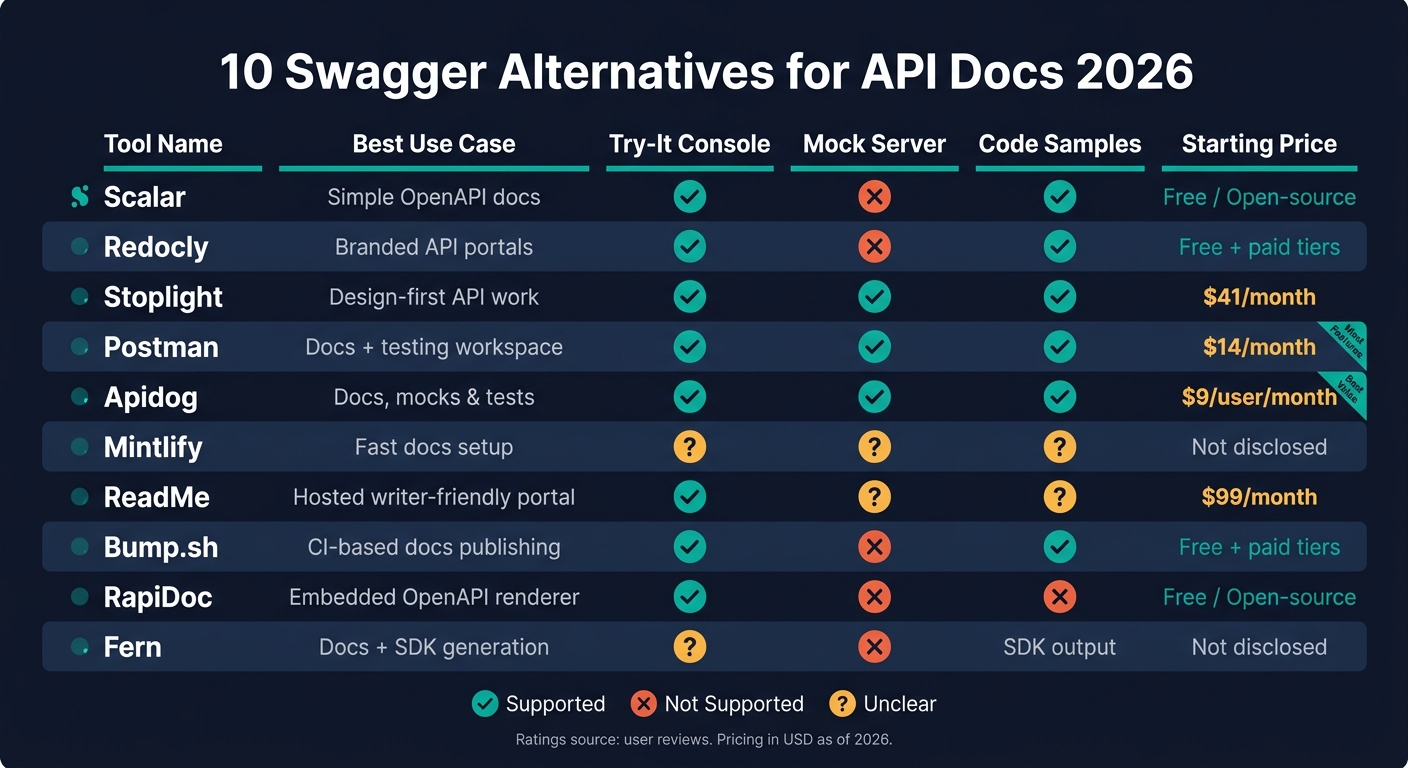
10 Swagger Alternatives Compared: Features & Pricing 2026
Swagger dropped in .NET 9: What are the alternatives?
sbb-itb-fd683fe
1. Scalar
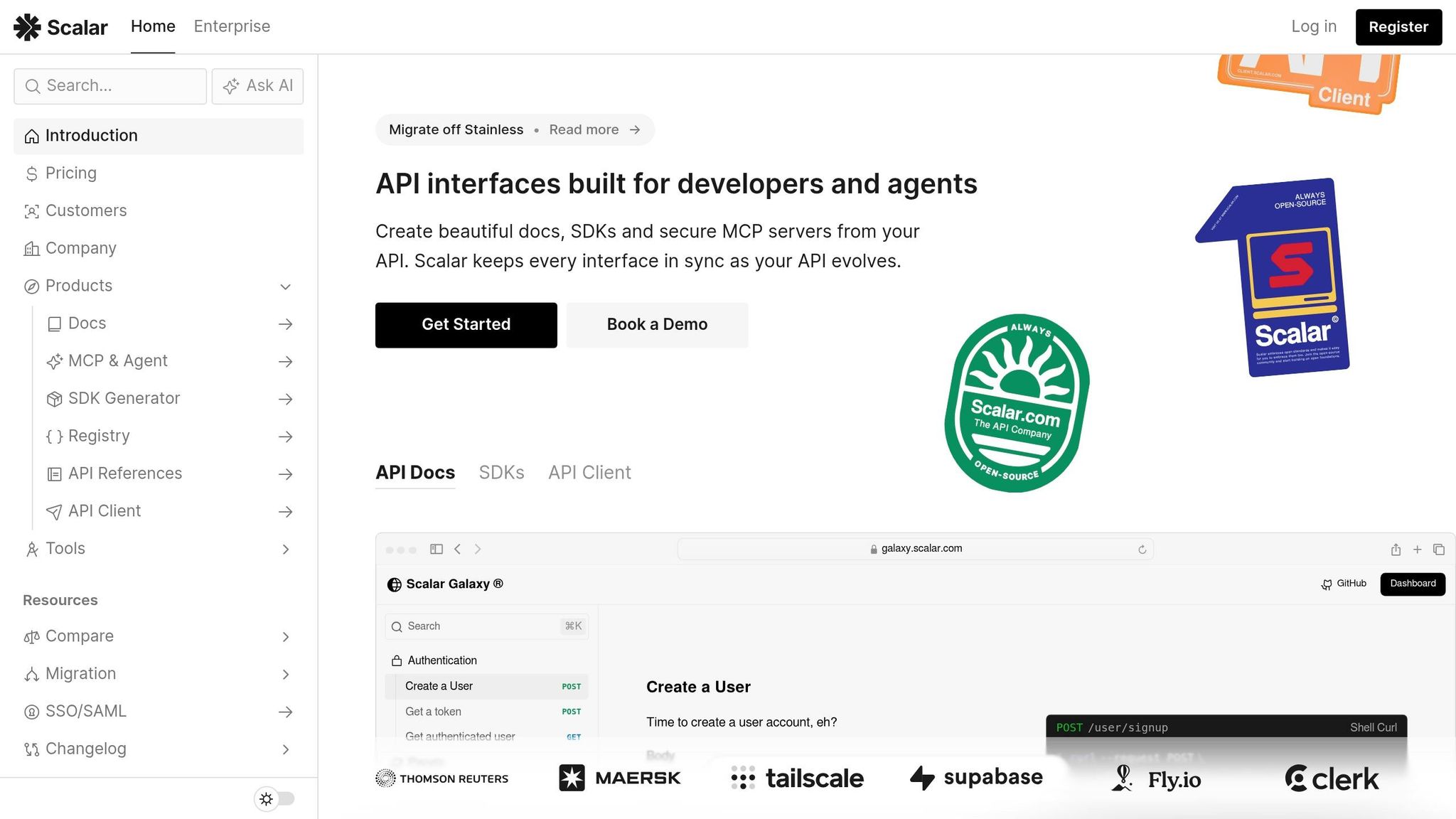
For teams that want the lightest OpenAPI-first option, Scalar is a natural place to start.
Scalar is an MIT-licensed, open-source OpenAPI documentation platform. It works best when the spec is the source of truth and the team wants very little setup.
Doc Editing Workflow
Scalar works straight from your OpenAPI definition and keeps docs in sync with the OpenAPI spec. That makes it a good fit for teams that prefer docs-as-code and spec-driven updates. If your team already treats the spec as the main record, Scalar fits that workflow without much fuss.
Try-It Console and Code Samples
The built-in try-it console lets developers test API requests right from the documentation page. Scalar also automatically generates code samples, which can help speed up integration work.
Scalar does not include a built-in mock server, so teams that need mock endpoints will need a separate tool.
Pricing and Plan Limits
Scalar's core product is free under the MIT License. For startups and small teams, that helps keep costs low. The OSS version has no license fee and no usage-based limits on the core documentation features.
2. Redocly
Redocly is a solid pick when visual polish and branded portals matter. It’s built on the Redoc renderer and turns OpenAPI specs into clean, easy-to-scan reference docs. For small teams, the tradeoff is pretty simple: you get better branding and portal options, but the best parts sit behind a paid plan.
Doc Editing Workflow
Redocly generates branded developer portals, including guides and tutorials, straight from OpenAPI specs. Its CLI handles linting and validation, which helps teams catch spec issues early. You can also apply custom theming.
Try-It Console and Code Samples
Redocly includes a Try-It console for interactive API testing right inside the docs. It’s OpenAPI-only, so GraphQL and gRPC aren’t supported. There’s also no built-in mock server, which means teams that need mock endpoints will have to use another tool.
That setup makes Redocly feel less like a barebones Swagger replacement and more like a polished portal option.
Pricing and Plan Limits
Redocly offers a freemium plan. The free tier works well for open-source projects and small teams, while paid plans unlock portal features.
3. Stoplight
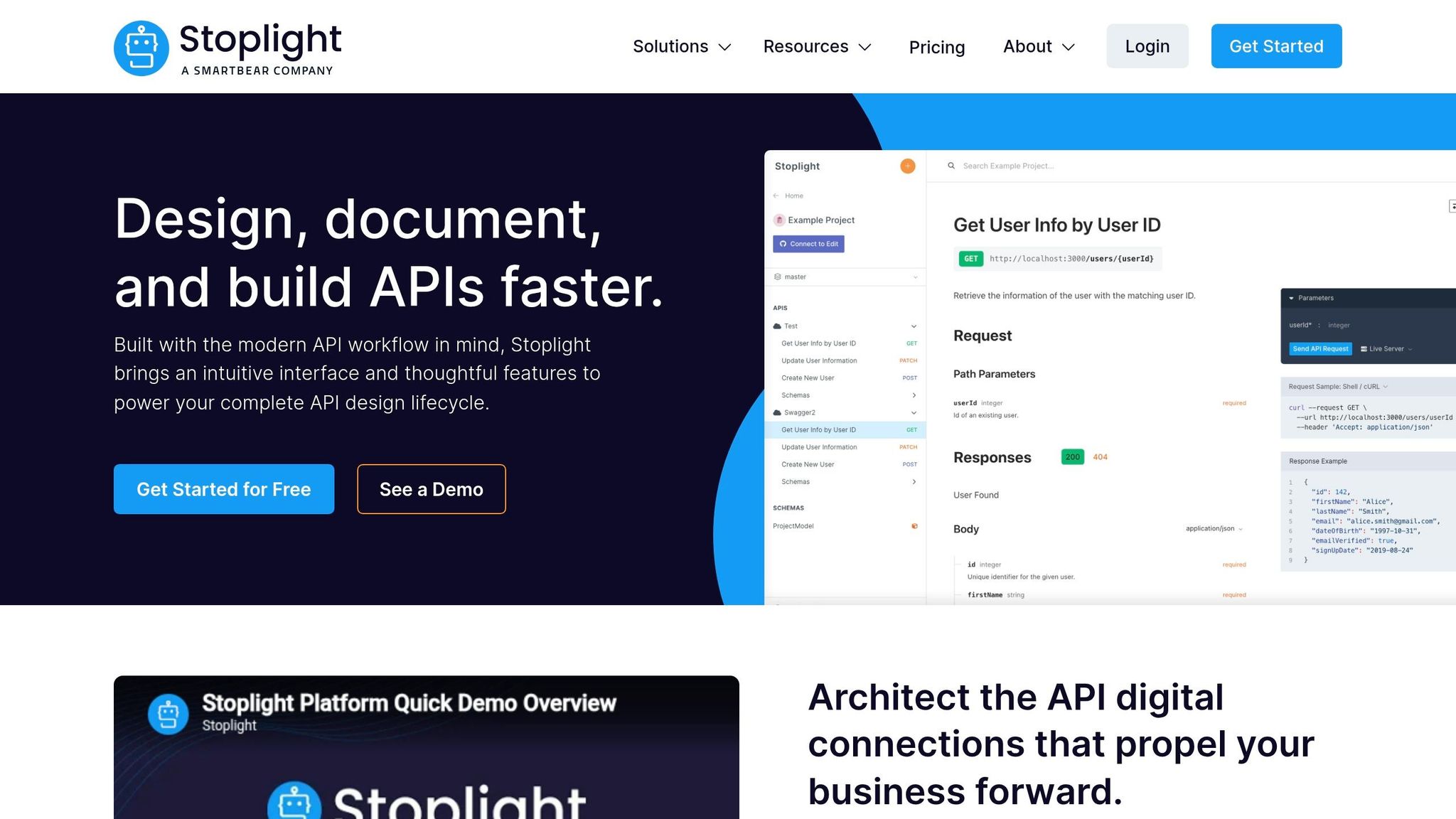
Stoplight is a design-first API platform, which means teams define the API contract before they write code. It has a 4.6/5 rating from 344 user reviews. It tends to shine when a team wants design, docs, mock APIs, and governance in the same workflow.
Doc Editing Workflow
Stoplight Studio gives you both visual and code views for OpenAPI files, with real-time editing. If one person likes forms and another prefers raw YAML or JSON, both can work the way they want without leaving the same tool.
It also includes built-in Spectral linting, which flags style guide issues as you edit. On top of that, native Git integration works with GitHub, GitLab, Bitbucket, and Azure DevOps, so teams can keep their usual review and version control flow.
Try-It Console and Code Samples
After the spec is in place, teams can test the API right inside the docs. Hosted docs come with a try-it console and auto-generated code samples in multiple languages.
That’s a nice touch for developer experience. Instead of bouncing between docs, Postman, and a code snippet generator, people can see the endpoint, try it, and grab sample code in one spot.
Mock Server and Testing Support
Stoplight’s mock server runs on Prism, an open-source engine that generates realistic responses and validates both requests and responses against the spec. In plain English, the spec doesn’t just sit there looking nice. It can actively shape testing and early development.
This helps frontend and backend teams work in parallel before the API is fully built. If you’ve ever had a frontend team blocked while waiting on backend endpoints, you already know why that matters.
Pricing and Plan Limits
| Plan | Price | Key Limits |
|---|---|---|
| Free | $0/month | 1 project; includes Studio, Spectral, and Prism |
| Pro | $41/month | 1 project, 1 user included; $10/user/mo extra; includes hosted docs and mock servers |
| Team | $105/month | Unlimited projects, 3 users included; $10/user/mo extra; includes style guide governance and RBAC |
| Enterprise | Custom | Unlimited projects; SSO/SAML, on-premise options, dedicated support |
One catch: every viewer counts toward user seats, so costs can add up fast. Very large or complex specs can also slow performance. For that reason, Stoplight usually makes the most sense for teams that want a single place for API design, documentation, and testing.
4. Postman
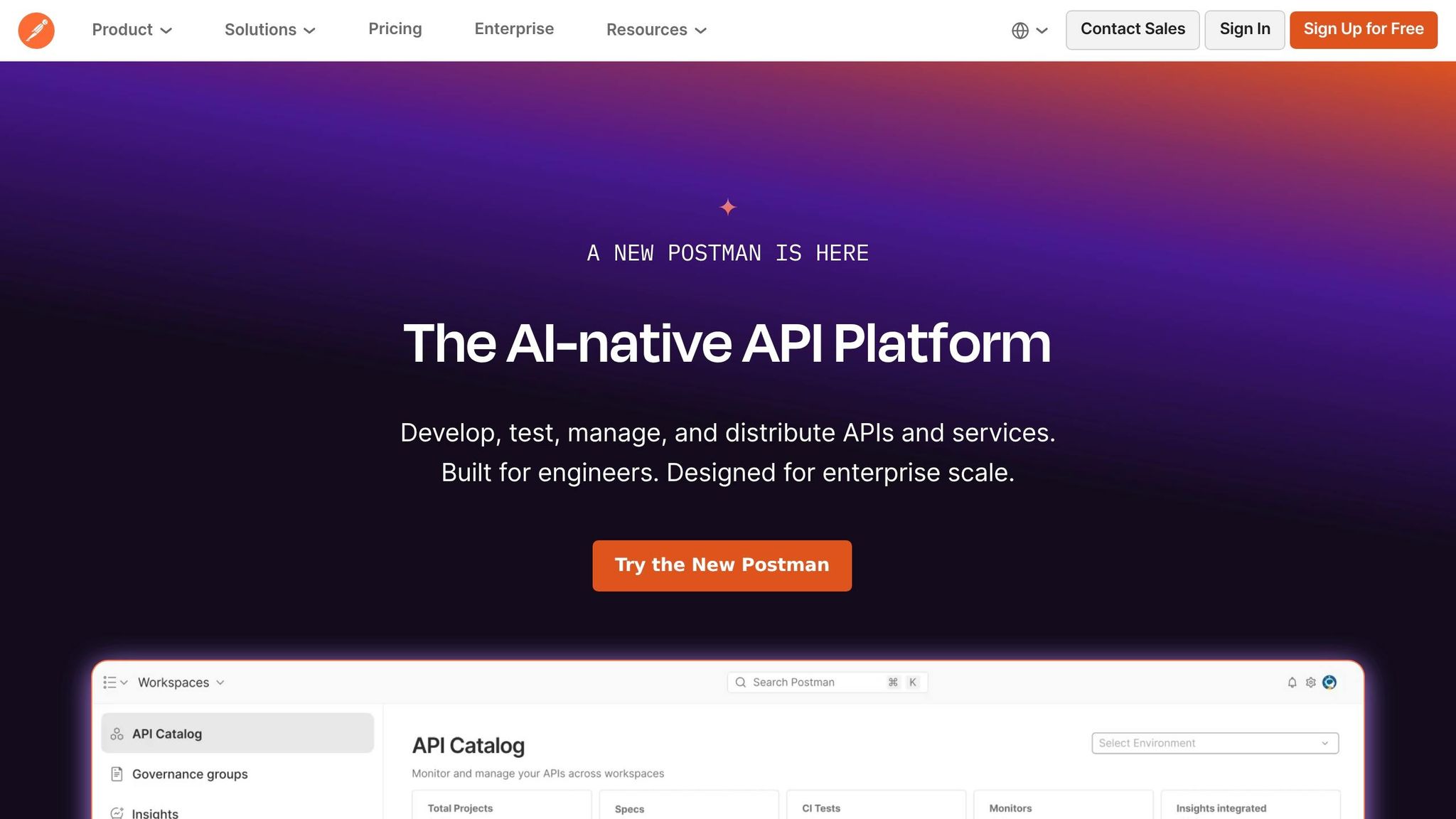
Postman has a 4.7/5 rating from 1,460 reviews and is best known as an API workspace that also works as a docs platform. In plain English, it gives teams a way to handle documentation, testing, and collaboration in the same place. That makes it a better match for teams that don’t want their docs living off to the side.
Doc Editing Workflow
Postman builds docs from collections, which helps keep documentation in sync with API requests. That setup can save small teams a lot of back-and-forth, since they can share collections, variables, and environments across different stages of development. It also supports REST, GraphQL, and SOAP out of the box.
Try-It Console and Onboarding
Developers can test endpoints directly inside Postman without leaving the platform. That’s handy for onboarding because new team members can read the docs, send a request, and inspect the response all in one place. It cuts down on context switching, which is often where things start to feel messy.
Testing Support
Postman supports automated testing and CI/CD pipeline integration, which helps teams catch breaking changes before they ship. It also supports mock servers, making it easier to share lifelike responses before the API is finished. On top of that, Postman includes tools to monitor API performance and health.
Pricing and Plan Limits
| Plan | Price | Key Details |
|---|---|---|
| Free trial | Available | Lets teams evaluate the platform before committing |
| Paid | Starting at $14/month | Includes collaboration and testing features |
| Enterprise | Custom pricing | Designed for larger organizational needs |
Postman works especially well for startups and small teams that want collection-based docs, built-in testing, and shared environments. Paid plans become more important when a team needs deeper CI/CD integration, shared workflows, and team-wide governance. For teams that want docs tied closely to day-to-day API work, not just a spec portal, Postman is one of the more practical options.
5. Apidog
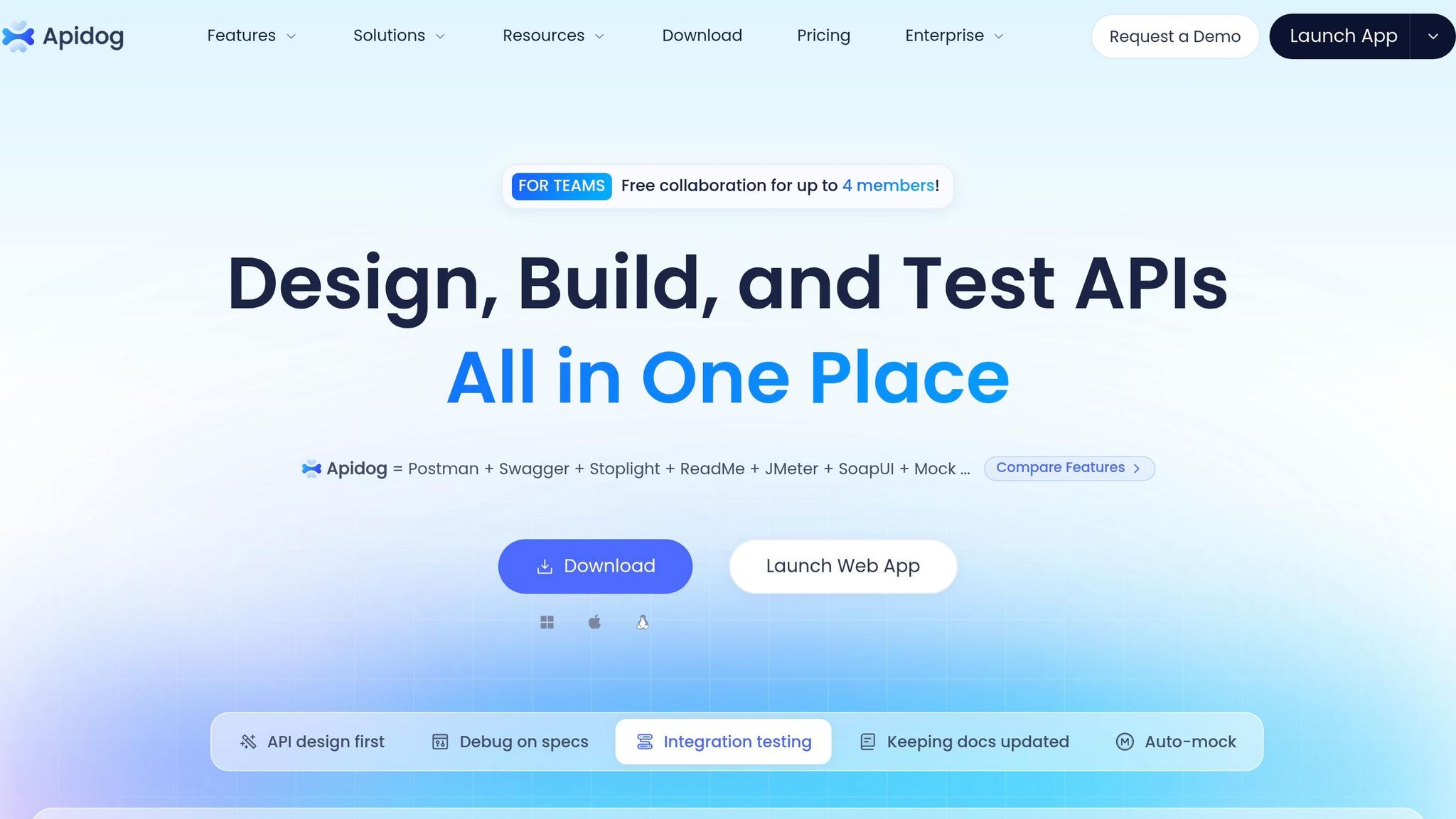
Apidog keeps the all-in-one workflow, but it leans more into OpenAPI docs, mocking, and test automation. It's built for teams that want docs, mocks, and tests in one place.
Doc Editing Workflow
Apidog supports OpenAPI-based editing and syncs documentation right from the spec. That means docs stay up to date as the API changes. Teams can manage documentation and tests in the same workspace, which cuts down on context switching and helps avoid a pile of separate tools.
Try-It Console and Code Samples
Developers can run requests from an interactive console inside the docs. They can also generate code samples straight from the documentation, so testing and reference material live side by side.
Mock Server and Testing Support
Apidog uses schema-driven mock generation to create realistic responses from OpenAPI specs and custom rules with very little setup. Teams can share mocks with frontend developers before the backend is ready, which makes early work a lot easier. It also supports automated tests, response checks, and multi-step tests.
Pricing and Plan Limits
| Plan | Price | Key Details |
|---|---|---|
| Free | $0/month | Includes core docs, mocking, and testing features for small teams |
| Basic | Starting at $9/user/month | Adds collaboration features and higher usage limits |
| Enterprise | Custom pricing | Designed for larger teams with advanced governance needs |
That mix is a good fit for startups that want fewer tools to manage.
6. Mintlify
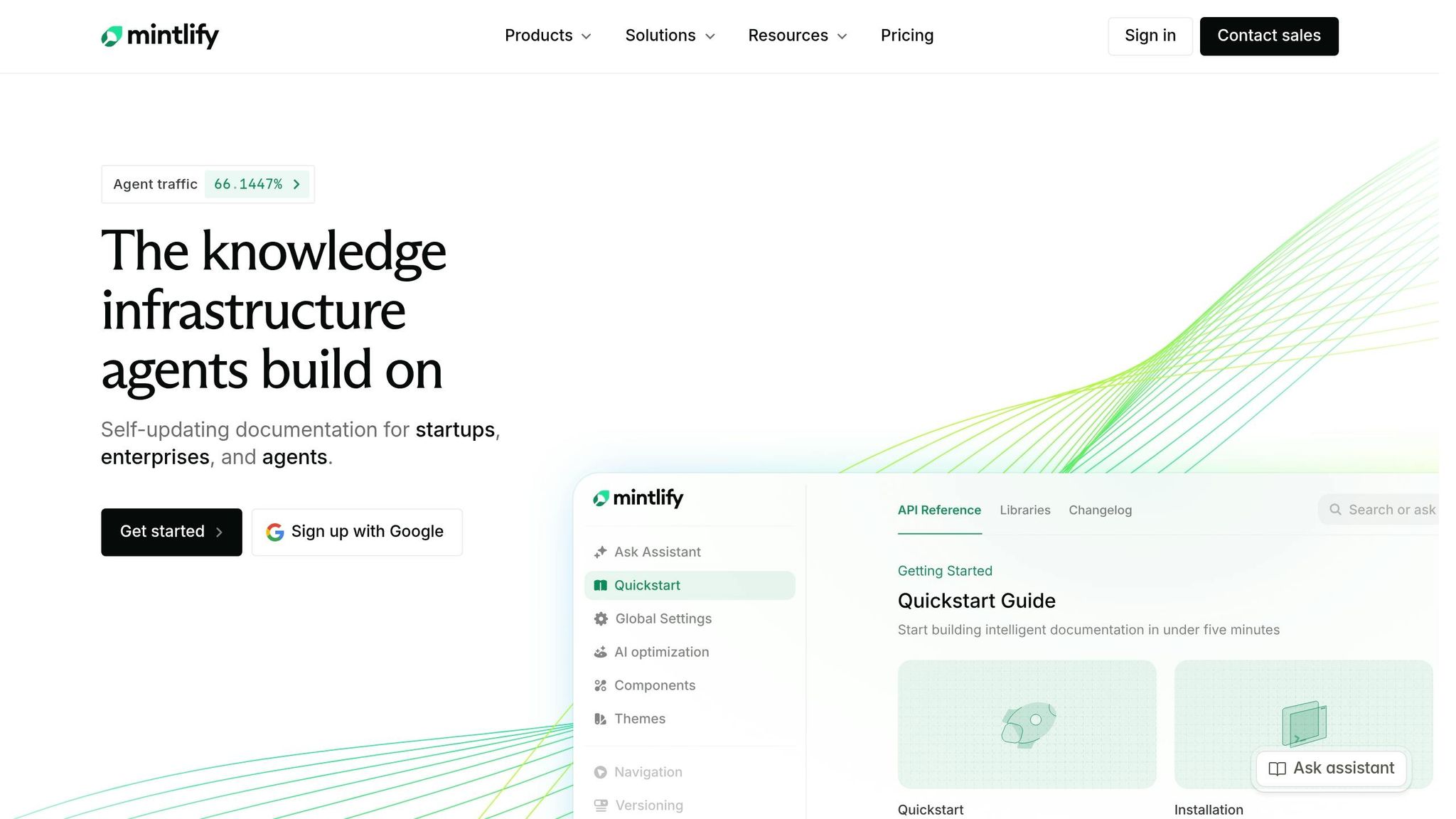
Mintlify is the hardest tool in this list to verify based on the sources currently available. So this section stays short on purpose.
At this point, the available sources don’t give enough support for a full side-by-side look at Mintlify’s docs workflow, interactive features, mock support, or pricing. That makes it tougher to judge Mintlify using the same criteria as the other tools in this guide.
7. ReadMe
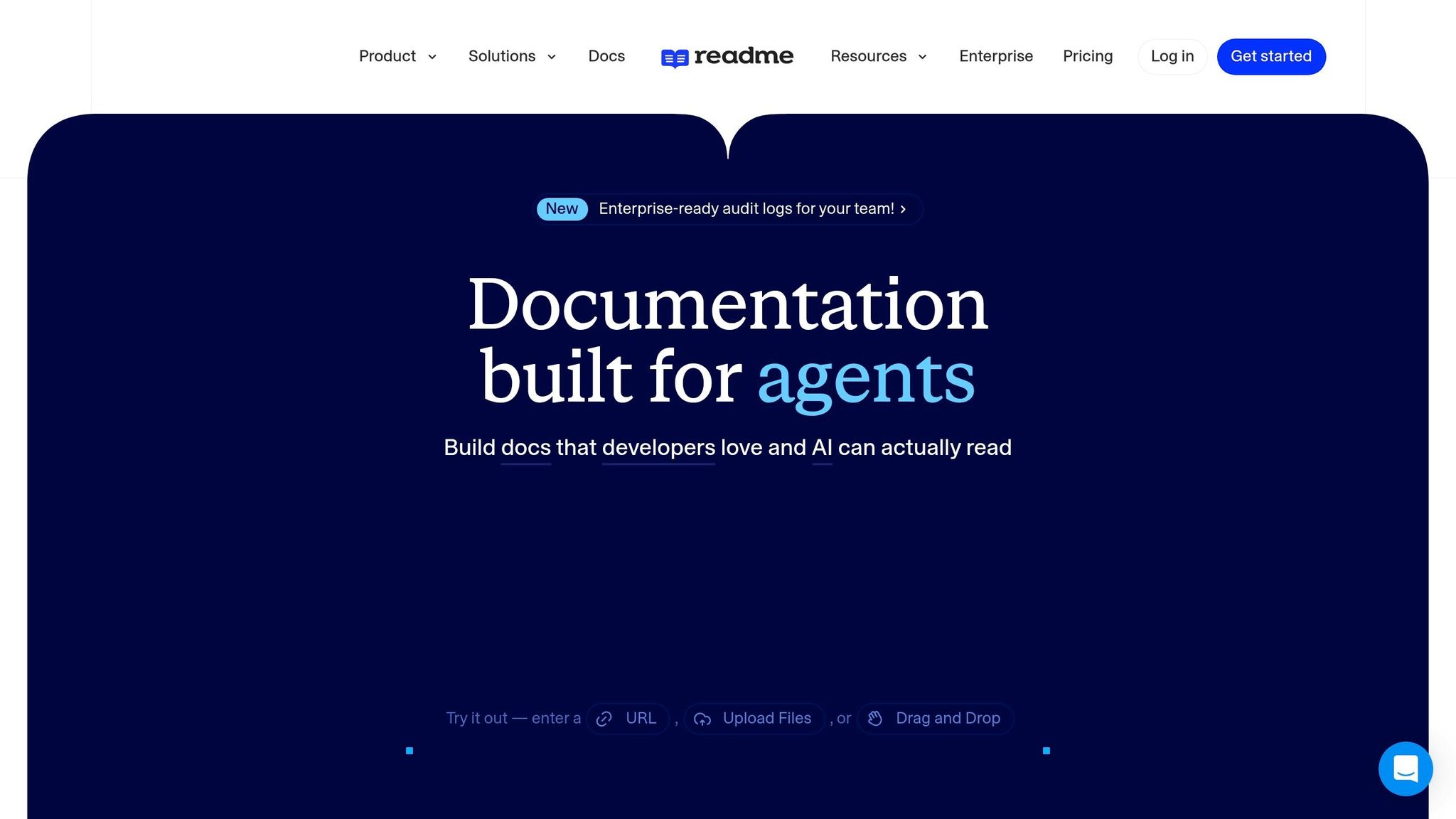
After the more infrastructure-heavy options above, ReadMe makes more sense for teams that want a writer-friendly docs portal. It’s a documentation platform built for shared docs work, with a strong focus on live API docs and an editing experience that feels simpler and less technical.
Doc Editing Workflow
ReadMe mixes a WYSIWYG editor with Markdown, which gives teams some flexibility. You can edit visually when speed matters, then drop into Markdown when you want more control. It also syncs OpenAPI specs through the ReadMe CLI or GitHub Actions.
Try-It Console and Code Samples
ReadMe includes an interactive API Explorer, so people can send live requests right from the docs. That makes the docs feel less like a static reference page and more like something users can test on the spot.
Pricing and Plan Limits
ReadMe offers a free plan for small teams and open-source projects. Paid plans start at $99/month and add custom branding, extra project support, and team collaboration features. Enterprise pricing is also available for larger organizations with more advanced needs.
8. Bump.sh
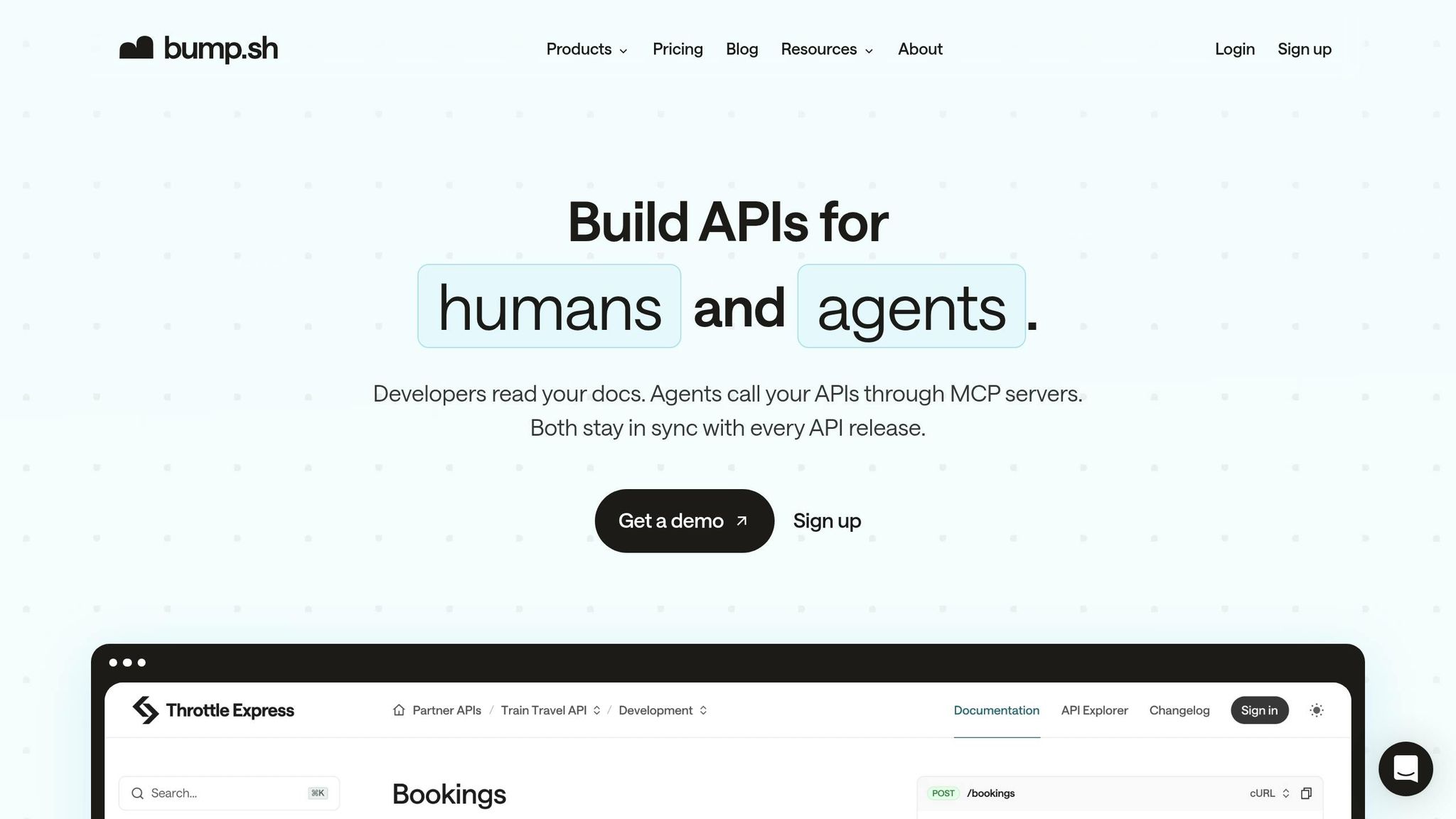
Bump.sh is built around a docs-as-code setup. In plain English, that means your API docs update from your CI/CD pipeline instead of relying on someone to publish changes by hand. The result is simple: docs stay current as the spec changes. It supports both OpenAPI and AsyncAPI specifications.
Doc Editing Workflow
You can push specs through GitHub Actions, GitLab CI, or similar pipelines, and the documentation updates on its own. That cuts out manual publishing steps, which is a relief for teams that don't want docs turning stale the minute an API changes. Once the spec is published, users can test it right inside the docs.
Try-It Console and Code Samples
Bump.sh comes with a built-in Try-it console, so users can test API endpoints directly from the documentation page. It also generates code snippets automatically from your spec, which saves time and gives readers something they can use right away. The Try-it console also works as a light way to verify endpoints from the docs page.
Pricing and Plan Limits
Bump.sh has a free plan for small projects and open source work. Paid plans are available for teams. The source does not list usage limits. It’s a good fit for small teams that want doc automation without a heavy docs portal.
9. RapiDoc
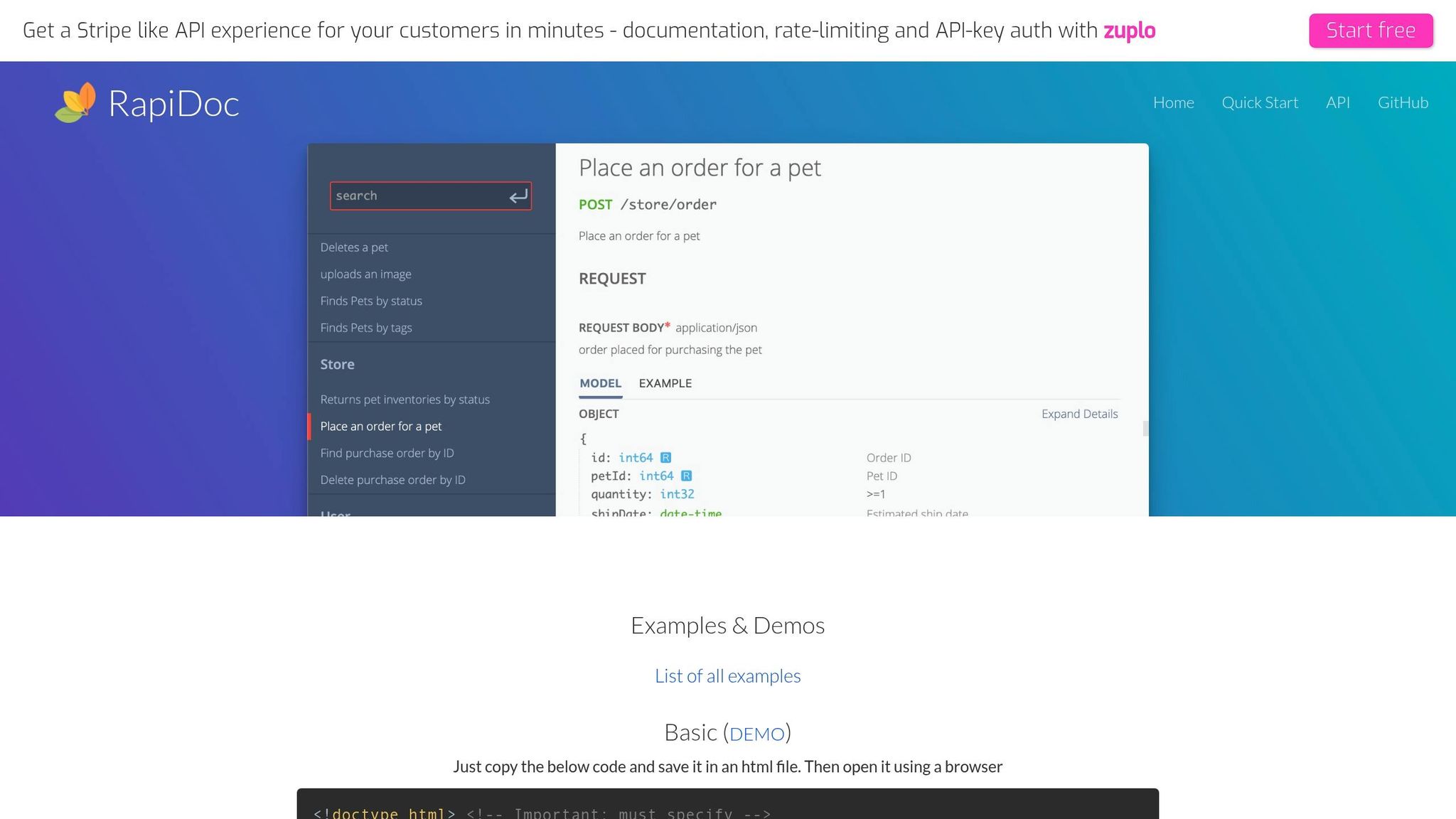
RapiDoc is an embeddable OpenAPI renderer, not a full docs platform. It’s an open-source Web Component that renders OpenAPI specs (OAS 2.0, 3.0, and 3.1) right in the browser. So if your team already has a spec and just needs a clean front-end layer, RapiDoc fits well. If you want a full documentation workspace, it doesn’t.
Doc Editing Workflow
RapiDoc has no built-in editor. It renders an existing JSON or YAML OpenAPI file as interactive docs, which keeps the setup simple. And because it uses a Web Component format, you can drop it into a site or portal without much fuss.
Try-It Console and Code Samples
RapiDoc includes an interactive try-it console, so users can send live requests straight from the docs page. That’s handy for quick checks and hands-on use. It does not generate code samples.
Mock Server and Testing Support
RapiDoc does not include a built-in mock server or test suite. It simply renders the spec and lets users run requests against it.
Pricing and Plan Limits
RapiDoc is open-source and free to use. It makes the most sense for teams that want embeddable docs without the overhead of a hosted platform. The tradeoff is simple: you don’t get an editor, a portal, or a governance layer.
For teams that need more than embedded docs, the next option adds a fuller authoring workflow.
10. Fern
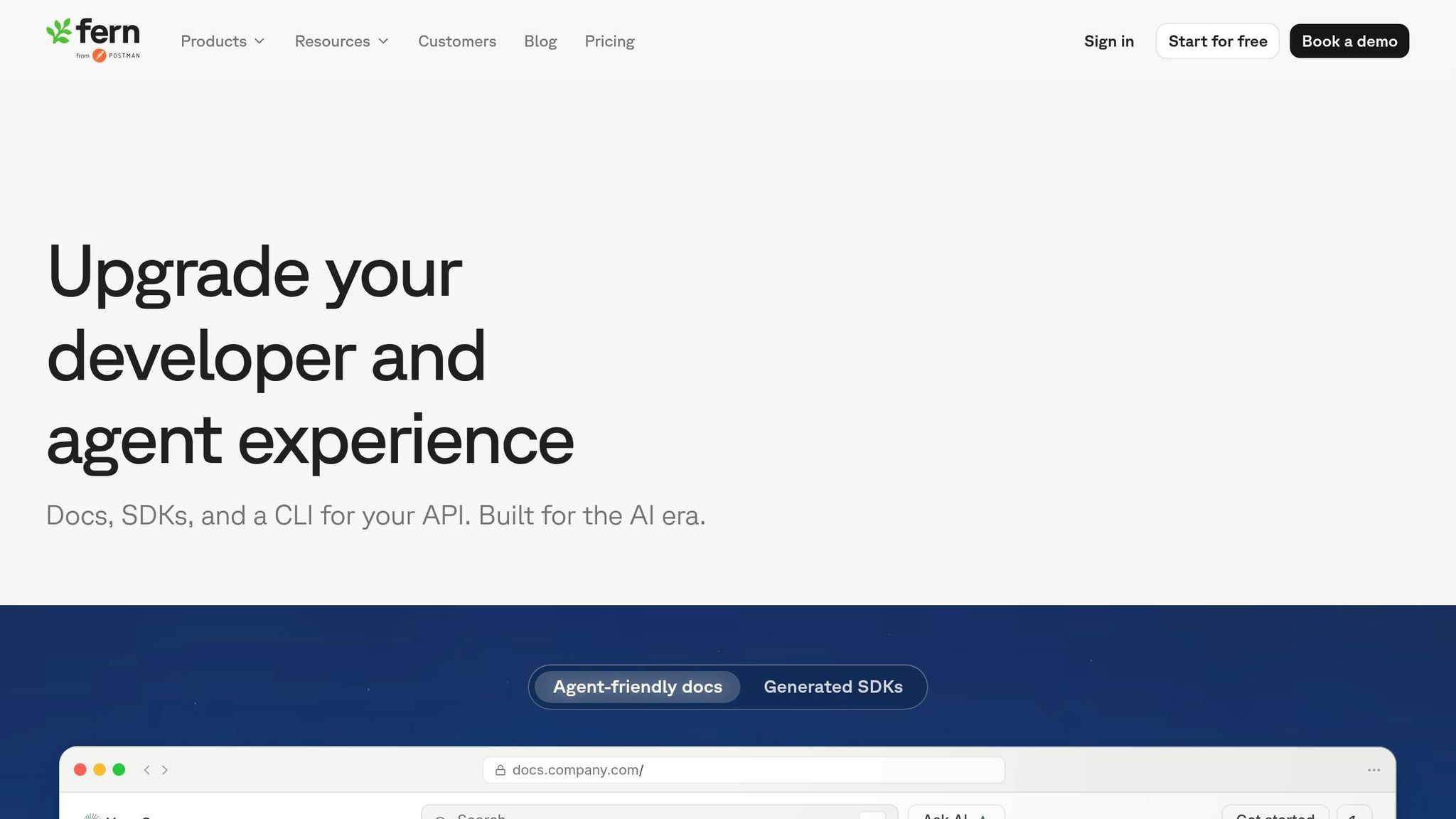
Fern builds on the spec-driven approach by generating both docs and SDKs from the same API definition. It works with OpenAPI, AsyncAPI, and gRPC, which means your documentation and client libraries stay tied to one source instead of drifting apart over time.
Doc Editing Workflow
You start with the API definition, and Fern generates the docs from there. That’s the core workflow.
What makes Fern stand out isn’t just that it renders specs. It pairs support for multiple spec types with SDK generation in several languages, which gives it a different angle than the other tools in this list.
SDK Generation
The clearest documented feature here is automated SDK generation in eight languages:
- TypeScript
- Python
- Go
- Java
- Ruby
- C#
- PHP
- Swift
If your team is weighing polished interactive docs against shipping client libraries with less manual work, Fern leans more toward the delivery side.
Mock Server and Testing Support
The provided sources do not mention a mock server or a testing layer.
Pricing and Plan Limits
Public pricing and plan limits are not listed in the provided sources.
Fern looks like a better match for teams that care more about generating client libraries than building a documentation portal with lots of interactive features. The tradeoff is pretty plain: strong SDK automation, but lighter documented support for interactive docs and testing.
Pros and Cons
The table below gives you the short version: each tool’s main upside, the catch that comes with it, and the kind of team it suits best. It boils the buying call down to four things: cost, workflow, testing depth, and portal quality.
| Tool | Key Pros | Notable Cons | Strongest Fit |
|---|---|---|---|
| Scalar | No license fee; built-in try-it features | Newer ecosystem; requires self-hosting for full control | Teams wanting simple interactive docs at no cost |
| Redocly | Visually polished output; strong OpenAPI linting | Full portal features require a paid plan; limited to OpenAPI | Teams prioritizing a high-end public developer portal |
| Stoplight | Design-first workflow, linting, and built-in mocks | Can feel like overkill for simple doc needs | Teams designing complex APIs from scratch |
| Postman | Broadest feature set; robust mock servers, testing, and CI/CD sync | Higher cost and platform complexity | Teams needing a full API lifecycle suite |
| Apidog | Affordable unified docs, mock, and test workspace; starts at $9.00/user/month | Platform complexity can slow adoption | Budget-conscious startups needing one unified tool |
| Mintlify | Fast setup for small teams; lightweight publishing | Best suited to teams that value speed over deep manual customization | Teams that want docs up quickly with minimal effort |
| ReadMe | Polished hosted portal; strong developer onboarding | Higher cost for premium features; less flexible than open-source | Customer-facing APIs needing a premium feel |
| Bump.sh | Simple automated change tracking and version diffs | Focused on docs only - no testing or mocking layer | Teams that need clean API changelog management |
| RapiDoc | Lightweight; easy to embed as a web component | No built-in hosting or full portal features | Developers embedding docs directly into an existing site |
| Fern | Auto-generates SDKs in 8 languages alongside docs | Requires strict spec adherence | Teams shipping multi-language client libraries |
The biggest divide still comes down to control vs. speed.
If your team wants more control, open-source options like Scalar, RapiDoc, and Fern can be a strong pick. There’s no license fee, but you’ll spend more engineering time on setup, hosting, and upkeep.
If your team wants to move fast, hosted tools like ReadMe, Postman, and Mintlify make that easier. The tradeoff is simple: less setup work now, recurring fees later.
Conclusion
Choose the tool that fits how your team handles docs right now.
Here’s the quick version:
- Lightweight Swagger UI replacement → Scalar
- Polished hosted developer portal → Redocly for branded OpenAPI docs; ReadMe for a polished interactive portal
- Design-first workflow with mocks → Stoplight
- All-in-one testing and documentation stack → Postman
- Docs-as-code teams that need SDK generation → Fern
The main thing is to stay lean at the start. For startups and small teams in 2026, it usually makes sense to begin with a free tier or open-source option, then add mocks or testing when the need is clear. Per-viewer pricing can get expensive fast as your team grows.
Interactive docs only help if your team keeps the source of truth up to date. So the best tool isn’t the one with the longest feature list. It’s the one your team will keep current.
FAQs
Which tool is best for a small team on a tight budget?
For small teams on a tight budget, open-source tools usually make the most sense. The big reason is simple: they cut out licensing fees while still handling the core jobs most teams need.
A few options worth looking at are SwaggerGo, DapperDox, and Postkit. Redocly also offers a free OpenAPI renderer for teams that want polished output without any upfront cost.
Do I need a hosted platform or a self-hosted tool?
It comes down to your team’s priorities: control, upkeep, and setup time.
Hosted platforms cut down on overhead. They work well for teams that want to focus on documentation instead of managing servers and other behind-the-scenes work.
Self-hosted tools give you more control over your setup and data. That can matter if your team has stricter security requirements.
Some tools support both options, which gives teams more room to choose the setup that fits how they work.
How do I choose between docs-only and all-in-one API tools?
It comes down to how your team works and what the project calls for.
Docs-only tools are built to turn your specs into clean, readable reference docs. That setup makes sense when your design process is already in good shape and your main goal is a polished documentation site.
All-in-one tools make more sense when you need more than docs. If your team relies on visual design editors, mock servers, automated testing, and shared workflows, these platforms help manage the full API lifecycle and keep docs in sync as the code changes.
Related Blog Posts
- AI Code Refactoring Tools Compared
- 10 Best API Documentation Generators 2026
- DocuSign vs. HelloSign: Integration Features Compared
- Free vs. Paid API Monitoring: Which Fits Your Needs?
More on StackRundown
Continue on the Software Comparisons hub, or read next: