Scenario Planning Software: Best Tools for Teams
Scenario planning software lets a finance or strategy team change one assumption, such as a hiring freeze, a 12% price increase, or a delayed contract…


Scenario planning software lets a finance or strategy team change one assumption, such as a hiring freeze, a 12% price increase, or a delayed contract, and see the effect on cash, margin, and headcount without rebuilding the model. That is the practical dividing line between a planning platform and a spreadsheet: the model stays intact while the inputs move.
Royal Dutch Shell built the discipline that made this mainstream. According to IBM's overview of scenario planning, the company introduced its Unified Planning Machinery in 1965, a computerized forecasting tool for predicting financial flows, and the scenario work that grew out of it helped Shell anticipate the 1973 oil crisis.
The right platform for a team depends on three things: how many drivers and dimensions the model needs, which systems must feed it live data, and whether leadership requires audit trails on every approved scenario. Those three questions separate enterprise CPM suites from mid-market FP&A tools and from lightweight what-if calculators faster than any feature matrix.
Below, the categories are mapped against team size, existing stack, and the cost items that appear after the license fee: implementation, model building, connectors, and the seats nobody counted during procurement.
Key Takeaways
- Scenario planning software replaces one-off spreadsheet copies with a single model whose assumptions can be swapped, compared, and audited.
- Buyers should test driver flexibility, live ERP and BI integrations, and governance controls during a pilot, not after signing.
- Enterprise CPM, mid-market FP&A, spreadsheet-connected, and services capacity tools solve different problems at very different implementation costs.
How Teams Turn Uncertainty Into Decision-Ready Plans
Scenario planning converts a vague worry into a quantified range that leadership can act on. The process defines an objective, identifies the internal and external factors that move outcomes, builds two or three coherent alternatives, and attaches early indicators to each so the organization knows which future it is walking into.
Software makes that loop repeatable. Without it, each scenario becomes a forked spreadsheet with its own formulas, and by the third revision nobody can explain why two versions of Q3 revenue disagree.
What Is a Scenario Planning Tool?
A scenario planning tool holds one model with switchable assumption sets, then reports the differences between them side by side. Revenue drivers, headcount plans, and cost assumptions live as named inputs, so a user can toggle "base," "downside," and "aggressive hiring" without touching formula logic.
The better platforms store each run with its inputs attached. That traceability is what lets a CFO revisit a decision six months later and see exactly which assumptions produced the approved number.
Most tools also handle scenario iteration at speed. Running twenty variations on churn rate should take minutes, and platforms that require a model rebuild for each variation fail that test.
How What-If Analysis Differs From a Single Forecast
A single forecast produces one number and hides the uncertainty behind it. What-if analysis produces a spread, showing how far the plan bends under plausible pressure and at which point a covenant, a runway date, or a hiring plan breaks.
IBM describes a quantitative approach built on three cases: optimistic, pessimistic, and best guess. The pessimistic case is the one that earns the software's keep, because it identifies the trigger point where contingency plans activate.
Rolling forecasts extend this further by re-baselining monthly or quarterly. A model that only supports annual budget cycles cannot absorb a mid-quarter demand shock.
From Planning Assumptions to Scenario Comparisons
Assumptions become useful when they are separated from calculations and labeled. Driver-based planning does this explicitly: headcount drives payroll, pipeline conversion drives bookings, and bookings drive collections, so changing one input cascades correctly through every dependent line.
Scenario comparison then becomes a reporting problem. Strong platforms show variance between any two scenarios at the line-item level, with the driver deltas that explain the gap.
Keep the set small. IBM's best practices recommend focusing on two to three outcomes, since finance teams get overwhelmed by unbounded scenario counts and the analysis stops informing decisions.
When to Use Deterministic Models, Sensitivity Analysis, or Simulation
Deterministic models suit decisions with a handful of controllable variables, such as a pricing change or a hiring plan. One input set, one output set, fully explainable in a board meeting.
Sensitivity analysis fits when the team needs to know which driver carries the most weight. Flex each assumption independently and rank them by impact on the outcome measure.
Monte Carlo simulation earns its complexity when uncertainties compound. As a platform describing probabilistic scenario modeling puts it, the approach captures assumptions as ranges and simulates thousands of combinations to show the full distribution of outcomes.
| Method | Best for | Output | Typical effort |
|---|---|---|---|
| Deterministic | Board-facing base/upside/downside cases | Discrete numbers | Low |
| Sensitivity analysis | Ranking driver impact | Tornado chart, elasticity | Medium |
| Monte Carlo simulation | Compounding risk, project completion dates | Probability distribution | High |
Capabilities That Matter Before You Buy
The capability that breaks a deployment first is model flexibility: whether the platform can represent a team's actual drivers and dimensions without a consultant rebuilding it. Close behind sits data integration, because a scenario built on a month-old ERP export is a historical exercise.
Evaluation should also cover who can edit a model, how approvals are recorded, and what reporting reaches leadership.
Can the Model Handle Your Drivers and Dimensions?
Dimensionality determines fit. A company planning by product, region, channel, and cost center needs a multidimensional engine; a single-product SaaS business planning by ARR cohort does not.
Test the awkward cases during evaluation. Intercompany eliminations, multi-currency translation, and allocations across shared services are where mid-market platforms quietly hit their limits.
Ask how new drivers get added. If adding a headcount category requires a vendor services ticket, the model will ossify within two quarters.
How Real-Time Data Changes Forecast Reliability
Live connections to the general ledger, CRM, and HRIS remove the lag between an event and its appearance in the plan. Actuals flow in, variance recalculates, and the forecast reflects the current quarter instead of the last close.
IBM's guidance notes that scenario planning requires clean historical data and typically an ERP-class system to centralize business information. A platform with a strong modeling engine and weak connectors produces confident-looking numbers from stale inputs.
Verify refresh frequency during a pilot. Nightly sync is adequate for budget cycles; intraday matters for cash-constrained operations.
What Governance Controls Keep Scenarios Trustworthy?
Governance means knowing who changed what assumption, when, and with whose approval. Version locking on an approved baseline prevents the common failure where three departments present three different "approved" plans.
Look for role-based permissions at the dimension level, so a regional manager edits their region without touching consolidated totals. Audit logs should record input changes, not just logins.
StackRundown's coverage of security and compliance frameworks is worth pairing with vendor security questionnaires when a finance model will hold compensation and forecast data.
How Collaboration, Approvals, and Reporting Work in Practice
Cross-functional planning falls apart at handoffs. Sales owns pipeline assumptions, HR owns headcount timing, and finance owns the consolidation, so the platform must let each contribute without emailing files.
Structured approval workflows matter here. A structured approach to portfolio scenario planning describes leadership reviewing two versions side by side, approving one, and setting it as the new plan before execution begins.
Reporting should reach non-finance readers. Variance reports that require model access rarely get read by the operators who need them.
When AI Features Help and When Transparent Driver Models Win
AI helps most with pattern detection on high-volume historical data: demand seasonality, churn signals, and anomaly flags in actuals. Those tasks reward machine learning because the relationships are statistical.
Transparent driver models win whenever a number must be defended. A board will not accept "the model predicted it" as an explanation for a hiring freeze, and regulated reporting requires a traceable calculation path.
The practical pattern is to use predictive forecasting for the baseline and explicit drivers for the scenarios layered on top. StackRundown's checklist for evaluating AI risk tools covers the vendor questions worth asking before AI outputs enter an approved plan.
How to Evaluate Platforms by Team, Stack, and Cost
Platform categories map cleanly to team size and governance needs: enterprise CPM for cross-functional modeling at scale, mid-market FP&A for finance-led planning with faster deployment, spreadsheet-connected tools for Excel-native teams, and capacity tools for services organizations planning delivery against people.
Pricing across this market is mostly quote-based, so total cost has to be assembled from license, implementation, and connector line items during procurement.
Enterprise CPM and EPM Suites for Governed, Cross-Functional Planning
Anaplan, IBM Planning Analytics, Oracle Cloud EPM, SAP Analytics Cloud, Board, and Workday Adaptive Planning sit in this tier. They handle many dimensions, multi-entity consolidation, and workforce plus supply chain planning inside one model.
The trade is implementation weight. These deployments involve model design, data mapping, and user training, and they assume a dedicated planning owner internally.
Choose this tier when supply chain, workforce, and finance scenarios must reconcile to the same numbers. None of these vendors publish standard per-seat pricing publicly.
Mid-Market FP&A Platforms for Faster Financial Planning
Planful, Prophix, Pigment, Vena Solutions, Mosaic, Runway, Limelight, and Datarails target finance teams that need driver-based scenarios without a six-month build. Prebuilt connectors to NetSuite, QuickBooks, and common HRIS platforms shorten time-to-value considerably.
These platforms cover budgeting, rolling forecasts, variance reporting, and board-ready outputs. Model depth is narrower than enterprise CPM, which is the point.
Fit check: if the plan needs more than five or six dimensions or heavy allocations, test that specific structure before committing.
Spreadsheet-Connected Planning for Microsoft-Centric Teams
Cube, Vena, and Quantrix keep Microsoft Excel as the interface while moving the data and version control into a governed backend. Formulas stay familiar; the file sprawl disappears.
This suits teams with deep Excel modeling skill and a Power BI reporting layer already in place. Adoption resistance drops sharply when analysts keep their existing muscle memory.
The limitation shows up in real-time collaboration. Spreadsheet-front-end tools handle concurrent editing less smoothly than native web planning platforms.
Lightweight Capacity and Project Scenarios for Services Organizations
Agencies and consultancies plan people against projects, so the scenario question is delivery capacity and margin. Productive and Synario address this space, alongside portfolio tools that model multi-path delivery against real capacity.
Relevant outputs here are billable utilization, project profit margins, and staffing gaps under a won-or-lost deal. Time tracking and invoicing data usually feed the model directly.
Finance-grade consolidation is absent in most of these tools. They answer resource allocation questions, not statutory reporting ones.
Which Integrations Should Be Proven in a Pilot?
Four connections deserve live testing: the ERP or accounting system, the CRM, the HRIS, and the data warehouse or BI layer. NetSuite, Salesforce or HubSpot, and Snowflake cover most mid-market stacks.
Prove the direction of flow and the field mapping, not just that a connector exists. Many integrations sync summary balances but not the dimensional detail a driver model needs.
Include one full close cycle in the pilot. Month-end is when mapping gaps surface.
How Much Does Planning Software Cost Beyond the License?
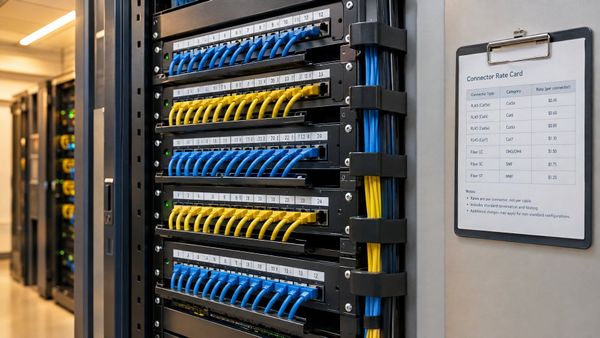
Implementation is the largest hidden line, covering model design, data mapping, and training, and it frequently rivals the first-year subscription on enterprise deployments. Premium connectors, sandbox environments, and additional model workspaces are common add-ons.
Seat counts creep as contributors are added across departments. A finance-only license count rarely survives a cross-functional rollout.
StackRundown's analysis of hidden costs in AI and SaaS platforms covers the usage-based charges and mandatory onboarding fees that appear in enterprise software contracts.
Match the Planning Platform to Your Decision Cycle
The platform should fit the cadence of decisions it supports. Annual strategic planning tolerates a heavier enterprise CPM build; monthly rolling forecasts demand fast scenario runs and live actuals; weekly staffing calls need capacity tools that finance never touches.
Team size and dimensionality set the category, existing systems set the integration requirements, and governance needs set whether audit trails and approval workflows are mandatory. Work through those in that order and the shortlist narrows to two or three vendors.
Then pilot with a real model, real data, and one full close cycle. Keep the scenario set to two or three outcomes, confirm that variance reporting explains driver deltas, and price the implementation alongside the license before signing.
Frequently Asked Questions
What is scenario planning software used for?
It models multiple possible futures against a single plan, showing how cash, revenue, headcount, and margin respond to changed assumptions. Finance teams use it for budgeting, rolling forecasts, and contingency planning; supply chain teams use it for demand and inventory scenarios.
What is the best scenario planning software for finance teams?
Mid-market finance teams that need driver-based scenarios quickly fit platforms like Planful, Pigment, Vena, or Datarails, which connect to NetSuite and similar ledgers out of the box. Enterprises with multi-entity consolidation and cross-functional models are better served by Anaplan, IBM Planning Analytics, Oracle Cloud EPM, or Workday Adaptive Planning.
Can Microsoft Excel be used for scenario planning?
Yes, and many teams start there with data tables, scenario manager, and sensitivity tables. Excel breaks down when multiple people edit versions concurrently, when audit trails are required, or when actuals must refresh automatically from an ERP.
How is scenario planning different from forecasting?
Forecasting produces a single expected outcome from historical trends. Scenario planning produces several coherent futures with different assumption sets, then attaches early indicators and trigger points so the organization recognizes which one is unfolding.
When do AI features improve scenario planning?
AI adds value on high-volume pattern detection: demand seasonality, churn signals, and anomaly flags in actuals. For assumptions a board must approve, explicit driver models remain preferable because every number traces back to a visible input.
What should a scenario planning software pilot include?
A pilot should rebuild one real model with live data from the ERP and CRM, run two or three scenarios end to end, and cover a full month-end close.
Confirm variance reporting, permission controls, and audit logging during that window, and get implementation costs quoted before the trial ends.